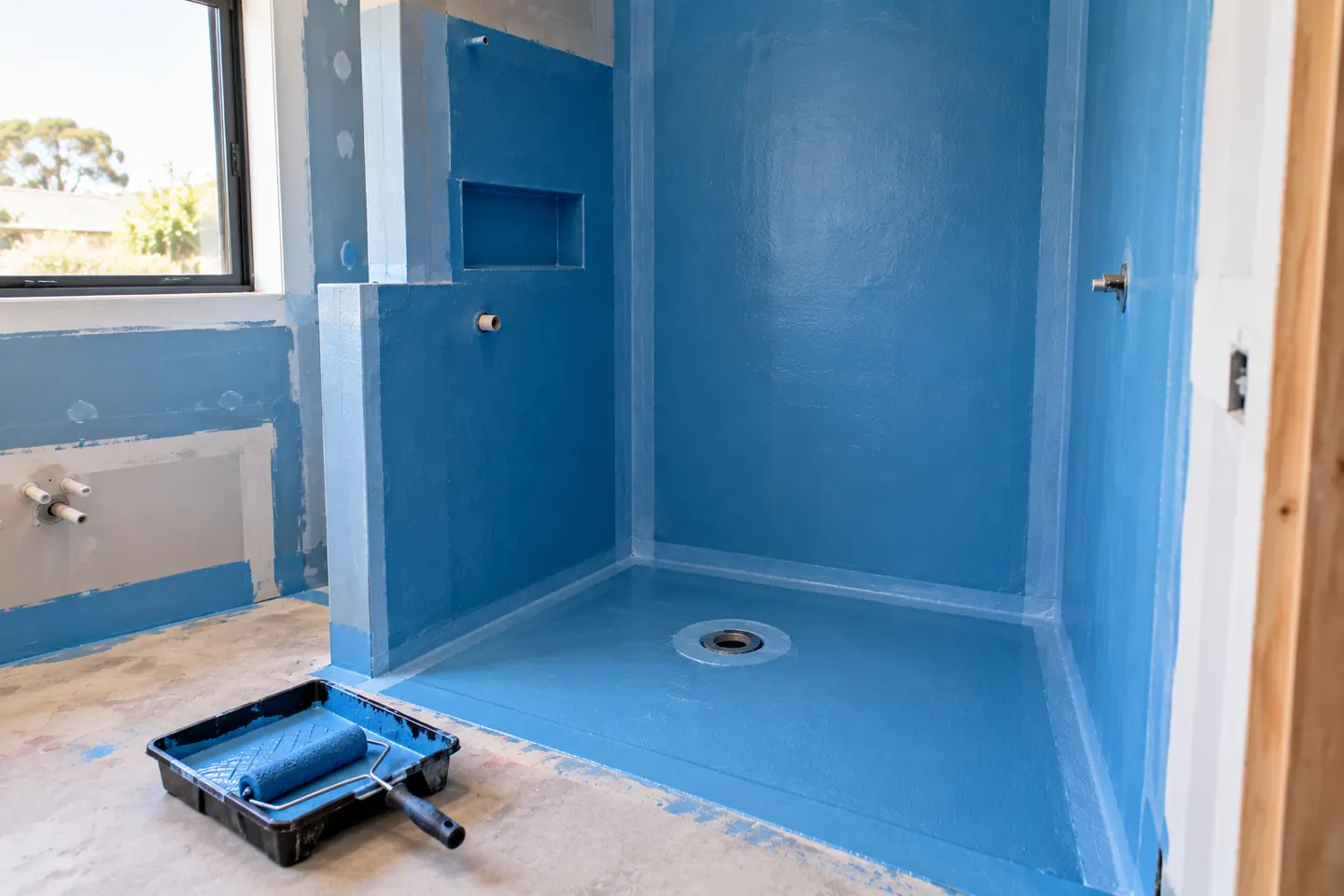
Waterproofing done right
- Sound substrate — suitable sheeting fixed properly.
- Bond breakers at internal corners and junctions so the membrane can move.
- Puddle flanges at every waste.
- Membrane applied in the required coats, up walls to the required heights.
- Cure time respected.
- Certificate issued by the licensed waterproofer.
Tiling done right
Set-out. Planned so cuts are balanced, niches align and tapware sits on grout lines or tile centres.
Falls. Shower floors slope to the drain; the rest of the floor does not send water to the door.
Large formats. Need a flat substrate and proper back-buttering.
Grout and sealant. Epoxy or high-performance grout in showers where suitable; flexible sealant in corners and junctions.
Slip resistance. Floor tiles suitable for wet areas.
Upstairs bathrooms
In two-storey homes, a failed membrane shows up in the ceiling below. Certified waterproofing is essential.
Signs of failure in an existing bathroom
- Swollen skirting or door frames outside the bathroom.
- Stains or bubbling paint on ceilings below.
- Loose or drummy floor tiles.
- Mould that returns after cleaning.
- Grout that keeps cracking in the same place.
Costs
Part of every renovation. See the 2026 cost bands.
Call 02 4307 5309 or send the room details through.
Questions people ask before they commit
Who can waterproof a bathroom in NSW?
Waterproofing is licensed work in NSW and should be done by an appropriately licensed waterproofer, who provides a certificate on completion. Keep that certificate with your home records.
How long does waterproofing take to cure?
It depends on the product and conditions, but membranes generally need a set drying time between coats and before tiling. Rushing it is one of the most common causes of failure.
What are falls?
Falls are the gentle slope in the floor that directs water to the drain. Shower floors need proper falls so water does not pond, and bathroom floors outside the shower should not fall towards the door.
Silicone or grout in corners?
Internal corners, changes of plane and junctions with baths and trays should generally be finished with flexible sealant rather than grout, because they move and grout will crack.